Monday, March 21, 2011

First month at post in Croon


March 7, 2011
Things I'm grateful for today:
   -a phone call from mama
   -little biscuits that Rose makes (called croquettes)
   -the clouds turning pink and purple at dusk
   -mefloquine and good health
   -Abdu, a three-year old little person who is so cute
   -when peanut butter is put in vegetable sauce :) yum
   -the four random episodes of the O.C. that Sarah put on my 
    ipod before I left
Things I'm not grateful for today:
   -cockroaches the size of mice in my house
   -mice in my house
   -trying to communicate with people who speak a mix of french, fulfulde, 
    dee, boom and hausa
   -parents that don't bring their children that have malaria into the health 
     center until their temperature is 104

15 Mars 2011
Hellooooo everyone!! I hope that everyone is doing wonderfully. I have been at post now for three weeks and I don't even know where to start. So much has happened and so much is going on. I am so grateful to be here, my village is great, the people are kind and welcoming and health work here is much-needed but manageable. 

The Village
My town is an hour outside of Ngaoundere, the largest city in the Adamawa region of Cameroun. In Ngaoundere, we have a "case" that belongs to all the volunteers in this region. Volunteers stay at the case when they are traveling through the country or for regional meetings or other business (planning projects, banking, etc.). My village is the ideal situation for me. It is located right on the main road so traveling is easy, but it is rural in the fact that there is no running water or electricity. There is both a primary and high school here. My estimate is that 4,000 people live here, although I may have a better idea about the population after the community assessment is complete. The town is surrounded my fields upon fields in every direction. Nearly every person in town is a farmer. Planting season is quickly approaching and I am pumped to tag along with some peeps and see how the harvest goes down over here in the C-roon. 

The Homestead
My house is brand new and was built by a wealthy dude in town. It has two separate parts, one bedroom/latrine and one larger room for the kitchen and side bedroom/latrine. Right when I arrived, the treasurer of the health center and wicked nice guy helped me change all the locks to ones that I had purchased and discussed with my possibilities for the windows. I'm going to have special windows made that have glass on one side and screen on the other; to keep the buggies out and the sunlight in. I bought the very basics when moving out here, so everytime I head into Ngaoundere, I plan on buying a piece of furniture or something for the house so eventually it will feel like my home. I have almost erradicated all the creatures in the house. The spiders were first to go. The cockroaches were next, but every other day or so another little bugger shows up. I'm not quite sure how to get rid of the mice that are having a field day up in the ceiling. If I poison them, they'll die up there and stink up the whole place. Or die and fall down...on me when I'm sleeping...joy. If anyone has any suggestions, let me know. Do mice hate garlic just like vampires? Because I have a lot of that, maybe that would make them leave. 

The Health Center
Monday through Friday I work at the health center, which was built in 2006 by the government. My amazing supervisor, Essaya, moved here with his family this past October. Right now, "working" means I'm shadowing the staff at the center and learning about the most prevalent maladies that people have. When my French and Fulfulde are better, I'll be educating people who come to the health center and women with family planning. I also intend to teach health education at the primary and high schools. Last week, I began the community assessment, which has involved me going around to each home. Essaya's daughter, Josephine goes with me to translate fulfulde into french. The goal is to ask every woman in village a series of health-related questions about their family and their children. I decided to start the communtiy assessment with the women for a few reasons. First, they are most commonly at home so they are easy to locate and interview. Second, they are responsible for the children so they know the most common maladies of the family and what their family is lacking in terms of healthcare. I am pumped to start health projects and already have some ideas based on assessment answers thus far, but I'm not getting too ahead of myself. I know my language needs to improve before I attempt large meetings and education.

The Grub
Most important, of courseeeeeee, is the food. Just joking. I love the food here. It is called "couscous" and is eaten three meals a day, seven days a week. But it is not the couscous we know. It is corn, dried and ground up and then boiled and "turned" into a ball-like much. It is hard to describe wow. No but it is yummy. Or it can be made from millet or manioc. And a sauce is made to dip the couscous in. Pitachio and fish. Peanut butter and vegetable. Beef and tomato. The possibilities are endless :). I love it. Why don't we have it in the US? Oh...right...because there's no nutritional value to it...I don't think, I'm going to investigate. Maybe I'll do a calorimetry experiment. I know there's a lot of calories in it because it fills you up, but a good source of fiber, protein, vitamins? That's what the sauce is for I guess. And Rose (Essaya's wonderful wife) makes these little biscuit things called croquetttes that I'm addicted to. Last night she gave me a whole container of them because she knows how much I like them. Um, worst idea ever. I could eat the whole thing in one sitting....but I won't. I'm spacing it out so they last. 

The People
Everyone here is pretty exceptional. I was worried when I first arrived in Cameroon that I had been spoiled by how nice the people were in Niger. I was been pleasantly surprised though to find everyone in my village to be welcoming and happy that I am here. People get pumped when I greet them in my broken Fulfulde and at the two village meetings that have occurred since I have been here, people have applauded when I have been introduced. In my three weeks here, I have grown close to Essaya's family and another family who lives right next to my house. Little Abdu is part of the family that lives close to me. He reminds me of a little boy in my host family in Niger named Razaac. The first time I saw three-year old Abdu, he grabbed a stick from my fence and threw it into the open window of my house. Right then I knew that we would be besties. He is the cutest kid and has started copying everything I say, which is great because I'm teaching him francais, petit a petit. I look forward to spending more time with other families in village when everything slows down. Spending all week in the hospital and doing the community assessment the rest of the time limits the number of free hours I have to roam around the village and hang out with families. I have two years though, insha allah, to spend more time getting to know the people that live here.

18 Mars 2010
Random anecdote from today: So Essaya and I were leaving a community meeting (which went very well, he introduced me and I explained in French what I was doing here for the next two years, he translated into Fulfulde) and a man approached him and said his daughter was having complications giving birth. But the man couldn't bring his daughter into the health center cause they lived way out "en brousse". So Essaya and I moto-ed to the hospital, grabbed medical supplies, and drove out. Off of the main road, we hit a dirt road that leads to another village called Mbang Mboom. Their home wasn't far on that dirt road, but the road was in bad shape and I could see why it wasn't feasible to bring a woman in labor on a motorcycle through there. The people are Fulbe, and they migrate with their cattle. Their home was made entirely of straw grass stalks (why can't I speak English anymore? Maybe there's no word in our language for the material you use to build a house in the desert of Africa). The door to get in was so little I had to stoop down. There were two beds inside made out of reeds/stalks (again, no equivalent word in our language) and a pot was boiling on a fire. Inside the pot were grasses and herbs of some sort; which I assume was a traditional medicine drink. Thankfully, the woman had managed to give birth before we arrived. Essaya gave her an injection though that he had brought, and cleaned the baby boy's embilical cord with iodine. He also gave the woman antibiotics for herself and the babe, and informed her of the next vaccination day (this Tuesday) at the health center. Outside of the house, three other women were sitting. Despite their unique attire and tattoos on their faces, I noticed something else interesting about these women; they had chocolate-colored eyes. It struck me. I realized that I have seen only black-colored eyes since I arrived in village. I told Essaya to look, I have the same eyes as them. He told the women I said that, and they started laughing and shaking my hand, so I guess they liked that. I asked to take a picture of the home and the woman's family sitting outside of the house. Essaya explained to them that I had never seen a house like that before. After I took the picture and thanked the family, I looked at their home. One straw house with a mama and tiny babe inside, a family sitting around a fire outside, and a herd of cattle out grazing somewhere. That was this family's existence. Isn't that just the most beautiful thing? The family thanked us again and again for making the trip out (mi soko mi soko) and then we departed. I plan on riding my bicycle out in the future. Hopefully the cattle won't move too far before I get the chance to visit.

Friday, February 11, 2011

Not-so-marooned in Cameroon

Hello everyone! Hope you are all doing well. Happy early Valentine's Day, good gracious how is it already mid-February? Here is a brief summary of my life for the past month:

January 17 Plane from Niamey, Niger to Casablanca, Morocco
Transition Conference in Rabat, Morocco
Traveled around Morocco Jan 26-Feb 5
February 6 Plane from Casablanca, Morocco to Yaounde, Cameroon
Cameroon Transfer Training Feb 6-9
Feb 9 Head to regional capital, Ngaoundere
Next week: Move into village outside of Ngaoundere

Life has been a crazy whirlwind over the past month, but I am so grateful to be in Cameroon now. The Peace Corps staff and volunteers here have been accommodating and patient with us. Two volunteers came into Yaounde for the few days to help us buy phone cards and transition to life in Cameroon. The country director here and my health program manager are both amazing women and I am pumped to work with them for the few two years. Driving on the train yesterday through the lush rainforests on the outskirts of Yaounde, I couldn't help but breath in the fresh air of eucalyptus trees that we were passing. I was reminded of the gift I have been given in continuing service.

After having internet in Yaounde and being able to catch up on current events around Africa (Egypt, Tunisia, Sudan...), I caught myself having mixed feelings. On one side, I am deeply frustrated by the negative events currently happening here that involve government corruption and people protesting in demand of their rights. It is frustrating to me that these events are happening period, but it is also saddening. When people in the US or other parts of the world turn on the television or go to cnn.com, these are the images they see of Africa. This is deeply saddening because this is not the Africa that I know. I think that if people could see the rainforests and smile at children out of a window of a train, then they may gain a new perspective about this wonderful continent.

Thursday, February 3, 2011

Traveling around Morocco

30 Janvier 2011
Hello all! Greetings from Marrakech, Morocco; the tourist center of the country. It doesn't feel like Africa, more like a petite Europe. I arrived here two days ago after a 3-day 2-night tour through the desert and Atlas Mountains. Here is what we (Michael, other Alison G, Alma and me) did during the tour:

Day 1: Left Fez at 7 am with trusty van-driver Haj, drove through some cities near Fez which included a resorty type of city that people from Europe stay in during the winter, drove through the mid-Atlas mountains (sooo weird to see mountains after being in Niger that is completely flat), fed monkeys in the mountains (holler), drove to Sahara Desert hotel (called Kasbah Erg Chebbi, Kasbah in arabic means 'family home' or 'home of') where we dropped off our stuff, rode camels into the desert (plus saw sunset), got to our tent site, served traditional Moroccan food of meat and vegetables in a tajine and mint sweet tea, chilled with owner of the hotel named Hassan, climbed hugeeee sand dune in the dark for fun, went to sleep

Petite Monkey

Riding camels in the Sahara Desert

Day 2: Woke up for sunrise, rode camels back out of the desert, breakfast at the hotel, drove through the high Atlas Mountains in van, stopped by the large and cool Toudra Gorge, stopped by a Berber house/souvenir shop where we learned about the different types of traditional Moroccan rugs and drank mint sweet tea, drove to Ouarzazate Hotel for dinner and sleeping and a much-needed shower. For dinner, we ate tajines with chicken and veggies. Here is what a traditional Moroccoan Tajine looks like:

Kefta Tajine (ground beef + egg) in ceramic Tajine bowl. The meat and egg are cooked
in the bowl and then served with bread. So yummy! Back to the right are brochettes that Ms. Alma ordered.

Day 3: checked out of hotel and drove to Kasbah Ait Ben Haddou which is a traditional Berber village in the mountains. This site is the scene of many famous Hollywood movies we were told. Check out the photo to see if you recognize it from any films. Then drove through the LEGIT Atlas Mts, windiest roads of my life, felt like a rollercoaster at some points, saw the largest mountain in Morocco, then Haj dropped us off in Marrakech.

Kasbah Ait Ben Haddou , one of the oldest known Berber villages in Morocco

Great three days! Lots of driving but definetly the best way to see Morocco. It is crazy how widely the climate varies. One minute we were driving through an oasis with palm trees and plots for gardening, the next minute it looks like the American midwest with large rock plateaus and cactuses (cacti? how do you spell the plural of cactus?). The moutains really were exceptional to see. I tried to take a pic of Mr. Stanley in the car while I was driving. I need to get better at taking pictures of him. Or maybe he's just not very photogenic haha jk!

So I've been in Marrakech for two days now. Here's what we've been up to:
Two days ago: met up with two other Peace Corps Niger volunteers, Laura and Nora, who are traveling around Morocco, walked around Marrakech, ate yummy soup in the bustling and crazy night food market for 3DH (8DH=$1)

Yesterday: Tombs, walking around, looking for gardens, getting lost while walking around, asking for directions back to our hotel, finding our way back to the hotel, walking around the medina and streets upon streets of cool shops, ate amazing egg+potato+onion+oil+cheese in a big bun sandwiches in the night market for 10DH

Today: Breakfast with everyone before parting ways (Michael is headed to South Africa, Griecs and Laura are heading home, Nora is headed to France), it's sad to say another round of good-byes. I feel like these past 3 weeks have been only good-byes. Then we (Alma, her sis who is visiting, and me) went to the Moroccan Art Museum, the bus station in the 'nouveau ville', or new city, to buy tickets for tomorrow, walked back to the old city/medina through a marathon that was going on, and then had a lovely and relaxing food session of omelette, green olives, fries, yogurt, crepe+honey and mint sweet tea.

Note: I realize that I talked about food A LOT in my blog. This may be due to the fact that a people and their culture can most accurately be described by their food and how it is prepared? Or, it may be due to the fact that I heart food. So don't mind me if you find that I excessively document what I eat each and every day.

Monday, January 24, 2011

Morocco is a-MAZE-ing!

Hey all! It feels like a lifetime, but only a week ago, I arrived in Morocco from Niamey, Niger. Last week was a very emotional time known as the Transition Conference. Many volunteers closed their service (COS) and a few people made decisions to continue volunteering elsewhere. A few people from my stage that had just begun service in Niger decided to ERS (expedited return to service), which means they all gone home and begin their service all over again in Philly with a new stage to a new place. Volunteers who chose this option are going to Costa Rica, Namibia or Malawi. Ellie boo is going to Malawi, a fellow Maradi volunteer that I know is going to Costa Rica. Best of luck to those ERS peeps. The volunteers that are still here in Morocco will be continuing in one of the following countries: Senegal, South Africa, Guinea, Rwanda, Malawi and...CAMEROON which is where I am going! People going to these countries will be leaving right from Casablanca, Morocco in the near future. When we get to our country, we will have a specialized training (language, culture, technical skills) and be placed at our site. It is going to be a challenging transition to start over again, but I knew that I wanted to continue servin' in Africa!

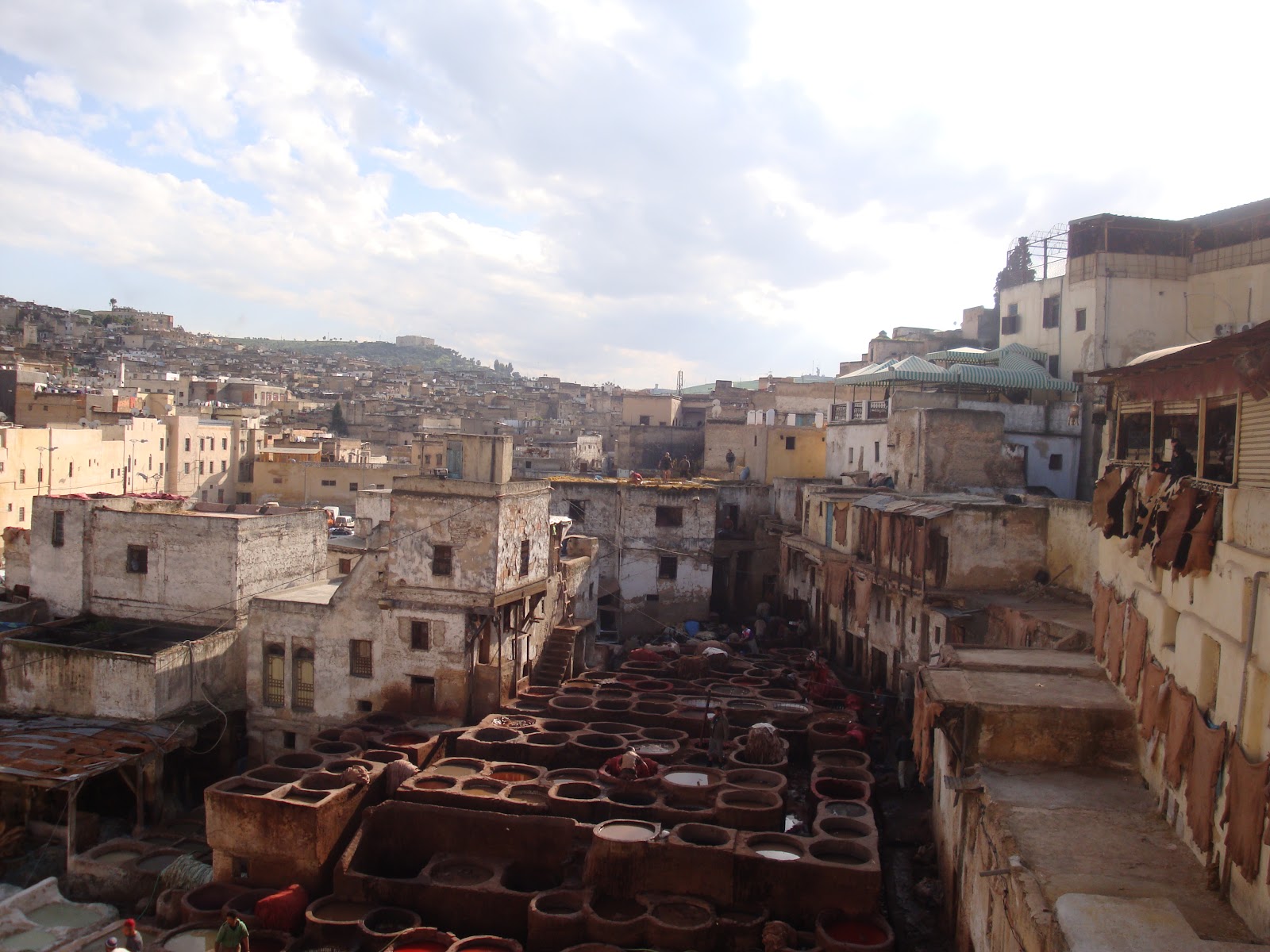
Morocco is pretty sweet! Yesterday, I took a train to Fez with some friends. Three of them were going to stay there so we went to a youth hostel and dropped their stuff off. Then we walked around the Medina, or huge old market, that is the heart of Fez. The streets are tiny and we got lost several times, but it was fun because we weren't really looking for anything. So we're walking around the MAZE of stores and people are trying to sell us stuff and this one guy is like would you like to go to a restaurant and brings us into this side street? We're like ok, this is sketchy, but we have two guys in our group walking around so we're ike what's the worst that can happen? So this dude ends up bringing us into this huge back area where they're selling rugs. We buy yummy sandwiches from him and he tells us the history of rugs in Morocco and Fez. We go upstairs for a demonstration of women making the rugs. The rugs were gorgeous and the guy was really nice and wanted to sell them to us but we were like sorry man we are poor college graduates who are traveling there's no way we can haul these things around the African continent. No it was cool though. Then he had one of his friends bring us to a tannery. So we walked through the labyrinth to this huge leather store that looked down into where they do all the dyeing. It was super cool!

 Looking down on all the beautiful rooms in the sketchy rug store

 Leather tannery, vats used to dye the leather

Entrance to the Medina (only one entrance/exit, fire hazard anyone?)

I tentatively leave for Cameroon February 6th. So, in the mean time, I may head back to Fez and do a desert tour through Morocco. Stay tuned!

BES Note:
Unfortunately, I didn't take photos of Flat Stanley in Niger, but yesterday in Fez, Morocco I took pictures of him in the market.

Mr. Stanley on a Moroccan rug
Flat Stanley will be coming with me to Cameroon and then I will send him back to Vermont!

Tuesday, January 18, 2011

Sad News...I'm in Morocco

18 January 2011
      Sooooo change in life plans. I am currently in Morocco. Due to safety reasons, all Peace Corps volunteers were evacuted from Niger. Here is the safety reason:

http://edition.cnn.com/2011/WORLD/africa/01/09/niger.abduction/index.html?iref=allsearch
        

    I was in my wonderful village for 8 days. I said goodbye to everyone in one day, packed up all my stuff, gave away all my food and home supplies to friends and mayor in my village, and traveled to my regional capital. From the regional capital, we traveled to Niamey and flew out early Monday morning. We are currently undergoing a Transition Conference in Morocco which is similar to a conference volunteers would have AFTER their two years of service are complete. It is really sad for us and for our villages and Niger as a whole, but I am grateful that we are all safe. We are completing a lot of paperwork, medical evaluations, and most importantly, discussing options for the future. There are quite a few options available.

    Thank you all for your support and love through this difficult and emotional transition time. I will keep ya'll posted as I determine what the next step in this journey will be.

First post in village

11 Janvier 2011
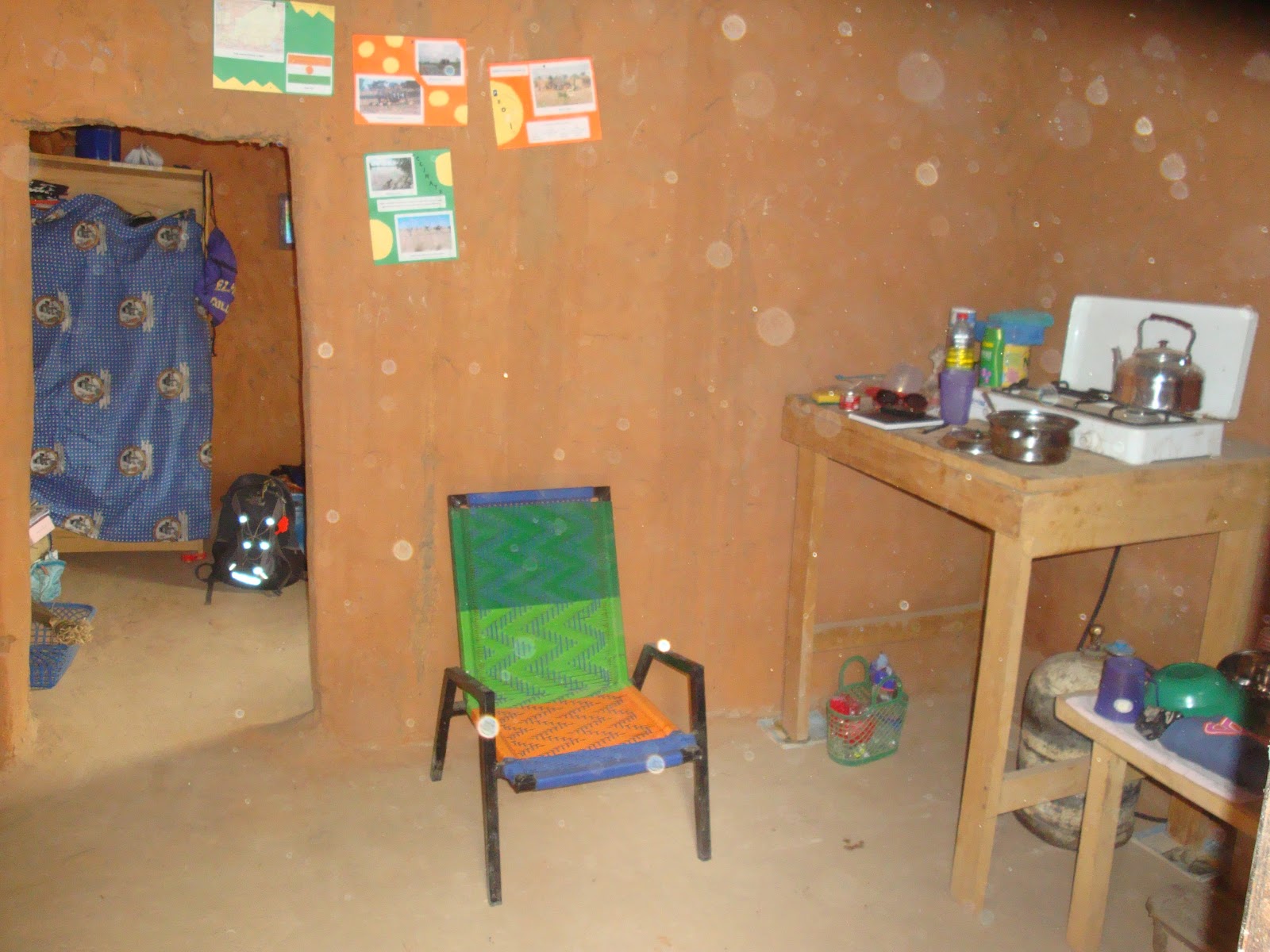
        Hello all! Greetings from my site in the desert! I arrived here on Tuesday, January 4th. When our group of Maradi volunteers first arrived in the region, we did a lot of shopping. We needed to buy everything for our sites; from trunks to dishes to food for a month to soap and more. We spent the morning of Monday, January 3rd going around the city and introducing ourselves to important people such as the Governor, National Guard, Gendarmes/Police, Chief of Maradi and others. We traveled around with three Peace Corps Staff who live in this area and are responsible for us while we live close to Maradi. They did most of the talking; which was good because all the people we met spoke Hausa/French fluently, and we're not up to par yet on language. The meet-and-greet is a respectful formality but also a way of letting influential people know that we are here so they can keep an eye out for us. On Tuesday morning, we met with the same types of governmental figures, but in an area more specific to my site. For security purposes, I cannot give the name of my specific region or town over the worldwideweb :). On Tuesday afternoon, they dropped me and all my stuff off at my site. We were greeted by a lot of people in the town and one of the Peace Corps Staff held a brief meeting outside of my home to tell people who I was, what I would be doing here, so on and so forth. My home is located inside of the town mayor's (called magori in Hausa) concession. There are many relatives that live in our concession so there is always someone around and always kids playing. Three weeks ago, a previous Peace Corps volunteer moved out of the house. I am grateful to her for leaving dishes, a wonderful bookshelf and two tables great for cooking and putting my water filter/dishes on. I had debated about buying these things before coming out but am glad now that I didn't. I spent the first afternoon unpacking and getting settled into my home. I also visited the magori and the health clinic to see my supervisor. Here are photos of my new home sweet home:

kitchen and back room

When I walk into my house, where I set up my bed outside

   I go to the health clinic Monday-Friday from 8:00am-12:00pm and then again from 3:30pm-6:00pm. The health clinic is called the CSE and is staffed and funded entirely by the Nigerien government. This past week and a half I have been observing what happens there. The mornings are the most busy thus far. When I arrive in the morning, there are many people waiting outside, mostly women and their babies. There is one area of the hospital for general illness consultations. These involve mothers bringing in their ill children to be seen and get medication. When a mother brings in her child, she has to bring the child's Carnet which is the form of ID. The Carnets are given to women when they have a child. However, if a child was born at home and thus did not receive a Carnet, they can be purchased for 100CFA at any time. For the majority of consultations that I have observed, the illness has been malaria. The clinic has rapid-malaria blood tests for adults, but for children the most common symptom is a fever. If a child has a fever, then it is most probably malaria and they are given medicine (magani) for it. If the fever is 40 degrees Celsius or greater (which is 104 degrees farenheit) they are given medicine but also a shot (allura) because their fever is so high.       

       Another area of the clinic is reserved for prenatal consultations and pregancy care. In Hausa, pregnancy is called haihuwa (pronounced hi-hoo-wa). In one room, the sage femme gives consultations to pregnant women. These consultations involve weighing the mother, measuring her stomach for the size of the baby and listening to the baby's heart. If there are no other problems, then the mother is given iron tablets and prophylaxis medicine so that she will not develop malaria while pregnant. There is a birthing room as well and an observation room for women who stay overnight at the CSE after they give birth.

     One room of the clinic is the pharmacy where people pick up medicine after their consultation. I have been impressed at how quickly the turn-around is. During the mornings, there are a lot of people around and waiting in line for a consoltation may take some time, but today for instance, there weren't many people around and I watched a woman walk right into the CSE into the consulltation room and then into the pharmacy to get the medicine and leave again. The whole process didn't take more than 10 minutes. There is also a room called "epicentre" which is a mini laboratory/immunization area. Someone from the city comes up on weekdays to work there. I have also seen the head doctor/my supervisor conduct wound cleanings and dressings in that room.
     
       Saturday and Sunday are my days off. Last Saturday, I cleaned my home with the help of some boys in town. We moved all the stuff from one room into the other and cleaned the ceiling and walls free of cobwebs, dust and bugs. Thankfullly, there are not too many creatures around the homestead. My favorite thus far has been a spider as large as my hand (don't worry, I had some boys kill it) and cockroaches in my latrine. I bought some insect powder to kill them but I'm pretty sure they're immune to the stuff. The bugs still freak me out at night in my house but I'll have to get used to it. This is the winter season after all. Just wait until the summer for the big creatures to come out of hibernation EEK what am I doing in Africa? I detest buggies. Oh well.

         On Sunday, I went to the market. I took one of the magori's sons with me to bargain and make sure I knew where the heck I was going. We took a bush-taxi from this village to the market town. We met up with Carolyn, a volunteer in a close-by village. It was nice to see her and to speak some English :). We got egg sandwiches (such a treat) and shopped around. I mostly bought spices and fresh vegetables (both of which I can't get at my site) as well as a big tabarma mat for the floor, flipflops (I need to start going easy on Birkies, they're too loved) and a little lantern to put by my stove at night when I'm cooking. All in all, it was a very successful day. It was just Carolyn and I this time, but I think we're going to make it a Sunday tradition for everyone in this area of Maradi to go into market. It will be nice to catch up after a week, eat some sandwich koys (egg), and buy fresh vegetables.

Hausa Vocabulary for BES kiddos
town mayor/leader: magori
medicine: magani
fever: allura
pregnancy: haihuwa
mat: tabarma
egg: koy (prounced qu-why)


Thursday, December 30, 2010

Swear-In

       Hey all! Happy almost New Years! So today was the swearing-in ceremony; the time when Peace Corps trainees become official Peace Corps volunteers. We headed into Niamey this morning and drove to the home of the US Ambassador in Niger, Bisa Williams. It was very generous of her to open her home to us for the ceremony. We had a "cocktail" of sodas and snacks before the ceremony. The ceremony consisted of speeches by the following people: Tondi, our program director/Nigerien dad; Myself, Dan and Alma who talked about volunteers in Niger and thanking our host families in Hamdallye, the Peace Corps Niger country director Valerie Staats, the deputy officer of the US Embassy and a Nigerien government official. Giving the speech was great. It was funny because Tondi finished up his speech (which was in both French and English, he's kindof a big deal) in which he talked about the highlights of our stage and PST: singing for Thanksgiving, Christmas and birthdays, the impressive results from our final LPI Language Proficiency Interivew, losing packages and letters, and the comrodery of our group.Then he called me up to give the speech. I wasn't up there for five seconds before every radio and tv station personnel who came to the event swarmed around me to tape the speech. It caught me off guard and I must have made a funny face cause all my fellow volunteers started laughing. I guess it was a good icebreaker :) No it was fine though. I wasn't even a little nervous, I think public speaking is growing on me. After all the speeches, the volunteers stood up. We all held up our right-hands and said the Peace Corps Volunteer Oath in both English and French. Then, shikena (all finished/complete/done), we were volunteers YAA It feels great! We all came out to lunch after at Almadines, our fave restaurant in Niamey. Tonight we will have a special going-away dinner. I anticipate a lot of singing and a lot of tears. Tears of happiness that we made it through training and grew close as a stage but also tears of sadness because we are all going to our own regions and villages and will not see each other on a daily basis. Thank goodness for the float plan on our phones so that we will be able to stay in touch for free. Tomorrow, the volunteers going to Zinder/Maradi will leave at 4am to catch the 10-hour bus ride out east. Holler holler. Plenty of time for me to ponder about my new years resolution(s) and world peace. And sleep. And read (thank heavens I don't get car sick). And listen to my ipod (thanks again Sharah).
 
Ali, Ellie and Alison Gr in Hamdallye before leaving for Niamey

 Alison & Tondi after ceremony

Peace Corps Niger Country Director, Valerie Staats, giving speech during swear-in ceremony

Ambassador Williams' backyard, where ceremony happened

End Note: I've tried to upload the speech videos, but they are too long and the bandwidth in this country is unable to support it. Sorry :( Love ya'll, talk to ya soon


P.S. Here is my speech in Hausa, and then English:
Mai girma ma taimakiyar jakadiyar kasar Amerika a Niger, Mai girma wakilin gwamnatin Niger, Mai girma darektan Peace Corps Niger, Mai martaba sarkin Hamdallye, Abokaina volontaire, Jama'a mata da maza.
Salamu Aleykum, sannunku da zuwa!
Sunana Alison cikin Amerika amma sunana Zara cikin Niger. Daga Vermont nike, karamar jaha kusa da New York. Barka mu da sallar swear-in. Cikin volontaires da suka zo Niger mune na karshen shekara hamsin. Yau, muna da sati goma a Niger. Mun zamna cikin Hamdallye da iyalanmu na Niger. Mun yi sallar Layya da iyalanmu kuma mun koyi yadda ake dafa abincin Niger. Hausawa suka ce: shinhudar huska ta hi shinhudar tabarma.Iyalina, sun bamu sunan Niger, Zara da Leya. Lokacin abinci, mun zamna bisan tabarma taray. Da farko, ba mu magana dayawa. Amma, kadan kadan mun koyi Hausa. Sun tamakay mu cikin koyon kalmomin Hausa hada karin magana, kamar "dumiya takashi kaza, yau koy, gobe tutu". Mun da yara, mun yi wasan kos kuma mun d'auki ruwan pumpo. Na d'auki bido babba. Yanzu, muna magana dayawa lokacin da mu kay ci abinci bisa tabarma. Mun gode ma iyalanmu don alherinsu kuma da hankurinsu.
Cikin wadanga sati goma mun koyi hausa da zarbarmanci, al'adun mutanen Niger kuma harakar aiki. Mun ga yadda ake bikin salla kuma mun koyi yanayin cikin Niger. Zamu bada taimako afannin kiwon lahiya ko aikin garka. Zamu yi aiki tare da al'uma; don haka, muna bukata goyon bayan su. Muna son koyon abubuwa bisa Niger, mutanenta kuma da al'adunta. Muna jin dadin zama sosai cikin Niger saboda kasa ce mai mutane masu halin kiriki kuma da abukantaka. Hannu da hannu, muna iya kawo gudunmowar mu a Niger. 'Yan magana suka ce: Babu bako cikin duniya, sai wanda ba ka sani ba. Muna jin daddi sosai da ganinku. Mun gode.

US Deputy embassy officer in Niger, Niger Peace Corps director, Chief of Hamdallye, my fellow volunteers, ladies and gentlemen,
Greetings, thank you for coming!
My name is Alison in America but in Niger, my name is Zara. I am from Vermont, a small state near New York. Greetings on swear-in. Our group marks 50 years of volunteers coming to Niger. Today, we have been in Niger for ten weeks. We have been living in Hamdallye with host families. We celebrated Tabaski and learned how to cook Nigerien food. As the Hausa people say: to share your sell is better than sharing your stuff. My host family gave us Nigerien names, Zara and Leya. When we ate, we sat on the mat together. At the beginning, we didn't talk very much. But we slowly learned Hausa. They taught us Hausa vocabulary and proverbs, such as: Life is like a chicken. Today you get eggs, tomorrow you get poo. The children and us played games and fetched water from the well. I carried a large container. Now, we can talk a lot when we sit on the mat to eat together. We thank our families very much for their generosity and patience.
In ten weeks we have learned Hausa or Zarma, Nigerien culture and work-related information. We learned about celebrations and daily life in Niger. We will help in the sectors of health and agriculture. We will work together, so, we need your help. We want to learned things about Niger, her people and her customs. We are so happy to be in Niger for it is the land of kind people and friendship. Hand in hand, we will work to bring a change for Niger. One who speaks well says: There are no strangers in this world, just those you have not met. We are happy to meet all of you. Thank you.